My Travels To Date

My Travels To Date
My travels to date -- so much left to see!

Saturday, August 8, 2020

Boating Amongst the Dragons


Halong Bay was recently voted as one of the New Seven Natural Wonders of the world in addition to already being designated a UNESCO World Heritage Site. This internationally acclaimed locale lies off the coast of Vietnam and forms the spectacular backdrop for my next adventure. Having spent several days immersing myself in the fast-paced culture of the bustling metropolis of Hanoi, all while dodging hundreds of careening motorbikes every time I tried to cross a street like a real-life game of Frogger, this excursion to the peaceful coastal region was a welcome reprieve. Upon arriving at the edge of the bay, we boarded our overnight boat and settled into our cabins, excited for the next leg of the trip.

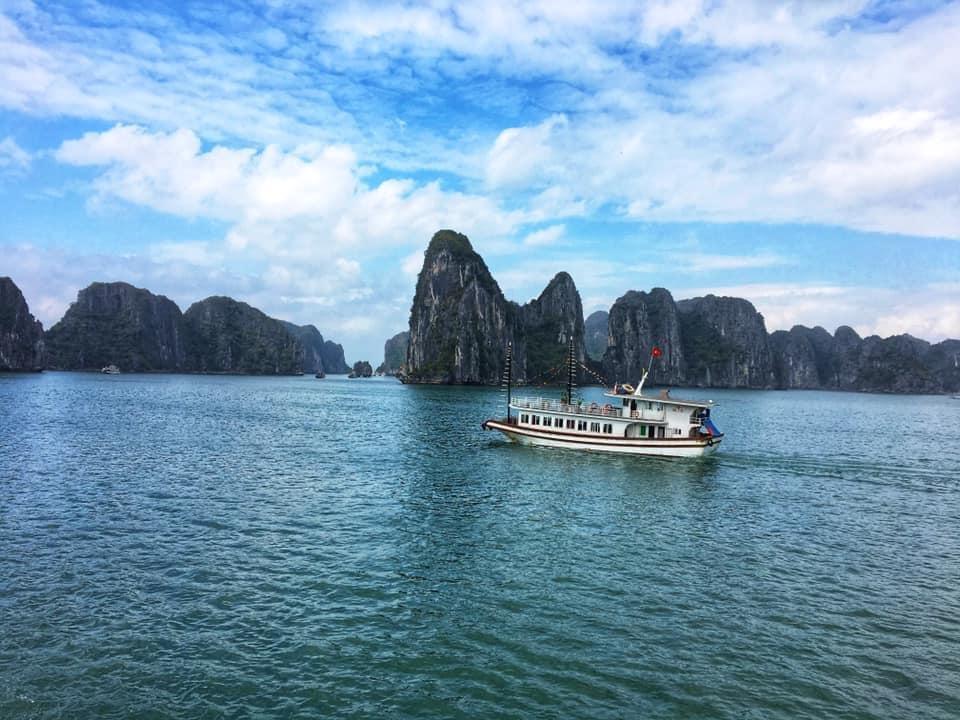
Soon afterwards we set sail, and headed out to venture deeper into the bay. “Halong” literally translates to “descending dragon” which derives from all of the rock formations jutting out of the water. The natural karst landscape purportedly resembles green dragon scales protruding from the water, and ties in with the mythological story of a mother dragon and her children that saved Vietnam from invaders by dropping jewels of jade from their mouths which formed the numerous rocky islands and subsequently caused the armada to shipwreck. Few places can live up to the hype of such a fantastical story, but once we started sailing deep into the expansive bay, we began to see the fabled formations slowly approaching. The further we headed into the bay, the more impressive the scenery became. The sea was simply littered with these green, rocky formations that stretched to the horizon in all directions, and the view was stunning. I found myself mesmerized by the landscape and kept taking photographs of the ever-changing panorama, but could never do it justice through the camera lens.

After a couple hours of navigating through the endless maze of craggy islands, it was time to experience the bay on a more personal level. We stepped off the boat and into kayaks, allowing us to experience the bay from water level. This new perspective removed the safety of the large vessel and caused us to feel infinitesimal as we rowed among the rock giants. The water was surprisingly calm as we glided along the surface, allowing us to concentrate on examining the limestone islands up close without fear of capsizing. The islands were blanketed in shrubs and other greenery which were teeming with wildlife – birds were flittering about the trees while a cacophony of insects was buzzing in the background. Floating along the water was a serene experience, and I was grateful for this up-close view that most day-trippers to the bay never get to experience.

After the evening’s excursion on the kayaks, my arms were sore from the exertion of rowing, and I was appreciative when I was finally able to sink into bed and be lulled to sleep by the gentle rocking of the boat. While the day had been unforgettable, there was fortunately another day on the water to look forward to in the morning.

The next morning, I awoke feeling refreshed and ready to explore more of the island landscape dotting the bay. Our first stop was Sung Sot (Surprise) Cave which was located in a massive karst island that created its own small harbor within the bay. A long winding path wound along the exterior of the cliffs, leading toward a large opening in the limestone rock face. Upon entering the mouth of the cave, I followed the tunnel until I emerged into one of the largest underground caverns that I had ever seen. The vast room exceeded 10,000 square meters in size and felt like I had wandered into a colossal cathedral as my footsteps echoed throughout the cave. Colorful lights illuminated the numerous stalagmites and stalactites, resembling daylight filtered through stained glass windows, further adding to the allusion of stepping within a majestic cathedral. I gradually ambled through the entirety of the massive cavern, peering down long-forgotten tunnels and admiring the captivating natural structures that formed over several millennia.

Upon exiting the cave, we got back onto our boat and sailed to Ti Top island for the preeminent view within all of Halong Bay. This view can only be experienced by first climbing over 400 uneven steps to the top of the island, ensuring that only the most determined will be rewarded the spectacular view. Upon reaching the lookout point, I was thrust into a 360-degree panorama of the bay, haphazardly strewn with jade islands as far as the eye could see. The islands starkly contrasted against the intense blue shades of the sky and water, creating a picturesque landscape straight from Vietnamese mythology. I stood completely absorbed by this view, not wanting to avert my eyes from this otherworldly topography lest I fail to commit it to memory. Eventually it was time to depart, so I begrudgingly descended from the clifftop and headed back to the boat.

During these past couple days, I had floated amongst the dragons of the sea, climbed atop their precariously high scales, and explored the dark realms of their underworld. Living amidst this wonder of nature was an awe-inspiring and unforgettable experience that I will forever treasure. While Vietnam was filled with many wonderful moments, Halong Bay stands out as my favorite experience during my entire visit.

The beautiful islands of Halong Bay

Sailing among the karst landscape

Taking a break from kayaking to explore an island

View from atop Ti Top island

Relaxing on the beach at Ti Top island

The multicolored illumination of Sung Sot Cave

Sunday, July 26, 2020

Fine Dining Debacle


The mere mention of France conjures up vivid images in people’s minds: the lofty spire of the Eiffel Tower sparkling at night, the palatial Louvre museum housing some of the world’s most famous artwork, and the magnificent chateaux of the Loire region showcasing the wealth and power of their original owners. But one particular image is so synonymous with France that it isn’t confined to a single location and is ubiquitously found in every corner of the country – the fine dining of French cuisine. French haute-cuisine is world-renowned as high-quality gourmet dishes created by master chefs, and evokes an air of arrogance served by haughty waiters. But underneath this pompous façade lies a plethora of amazingly delicious food that is an essential indulgence when visiting the country.

It is into this culinary world that I enter one evening, stepping into a fancy restaurant to experience a traditional multi-course dinner and being immediately greeted by waitstaff wearing specially tailored suits. I feel conspicuously under-dressed in my wrinkled khakis and polo shirt, but am politely ushered to an empty table and handed a menu written entirely in French. Fortunately, I took several years of French language classes in high school and college, so I have a rudimentary understanding of basic phrases that allows me to stumble through ordering dinner. After browsing through the menu and hearing his recommendations, I place my order with the waiter in broken French, and he leaves to inform the kitchen.

A basket of freshly baked bread rolls is swiftly placed on the table, which is a welcome sight to my grumbling stomach. I immediately swoop in and place a roll on my plate, eagerly anticipating the taste of fresh bread smothered in melting butter to whet my appetite. Rather than tear the bread apart with my fingers like an American barbarian, I assume an air of elegance in this fancy restaurant and pick up my knife to slice the roll in half. Without explanation, my hand slips and the bread roll flies off my plate and lives up to its name by continuing to roll halfway across the restaurant, nearly tripping a passing waiter. To add injury to insult, I notice that my hand is the same color as the red flush of utter embarrassment washing across my face. Despite using a dull butter knife to cut the bread, I had somehow managed to slice open my finger with the blunt blade, and a stream of blood was draining from my flesh. Grabbing the closest object I could find to stanch the bleeding, I wrapped my finger with the elegant white cloth napkin from my lap, forever staining the napkin with my ineptitude. Despite wanting to run out of the restaurant in humiliation, I kept my composure and anxiously waited for the appetizer to arrive to distract my nerves.

My first dish finally arrived, and I could smell the comingling scents of butter and garlic emanating from my escargot platter. Keen to redeem my prior blunder, I carefully reached for my fork and cautiously ate each delicious morsel of escargot one methodical bite at a time. Despite the unappealing impression that eating snails can evoke in people, I truly found them to be delicious, and I savored each one with delight. Having eaten the final escargot without any further mishaps, I was regaining my confidence and ready to take on the next course of the meal.

The meal fortunately progressed without any more troubles, and I devoured the remaining dishes of the dinner which included some braised chicken in wine sauce (coq au vin) and a little bit of duck liver (foie gras) as a side. After the main courses were completed, I opted for the cheese tray to accompany dessert. The French truly prize their diverse cheeses, and I wanted to partake in this experience. Not realizing that a cheese course was such a production, I was startled when the waiter rolled over a large cart filled with twenty types of cheeses underneath a plastic lid. My mouth began to salivate at the thought of tasting new flavors of cheese that I’d never heard of before.

With a quick motion of his arm, the waiter lifted the lid off the tray, exposing the prized contents… and that’s when it happened. The olfactory overload of the combination of intense cheese odors hit my nose with a fierce uppercut, causing me to reflexively cringe in repulsion before I could regain my composure. Smirking in victory at having conquered yet another boorish American, the waiter proceeded to describe each particular cheese in lengthy detail, starting with the hard cheeses and gradually concluding with the soft and moldy goat cheeses that literally melted on the plate from decay. Throughout the entire demonstration, the scents of atrociously smelly cheeses enveloped the entire table, settling like a cloud upon my being and soaking into my clothes. Holding my breath and starting to go faint at this point, I quickly pointed at a couple of the less repellant cheeses and made my selection in the hopes that the lid of death would soon be lowered back onto the tray. After a dramatic display of slicing the cheeses and delicately placing them onto my plate, the waiter obliged my silent pleas and finally sealed up the rancid dairy display and rolled it onward to the next unwitting victim.

Recovering from the attack on my senses as the air slowly cleared, I began to taste my cheese selections with trepidation, and they were surprisingly delicious! Turns out you can’t necessarily judge a cheese by its pungency, because I savored each bite with honest delight and cleaned the entire plate. At the end of a nearly three hour dinner, my stomach was stuffed and my eyelids were starting to droop from exhaustion. Emptying out the rest of my bank account, I paid the waiter and thanked him for a wonderful dinner despite appearances to the contrary, and I began the short walk back to the hotel. For many reasons, this would be a traditional French meal I would never forget, as it had pushed all of my senses to the limit. And in the process, I apparently found the trick to clearing out a wide path on a busy sidewalk as well, as all the pedestrians avoided the cloud of cheese funk that wafted around me the entire solitary stroll home.

The infamous cheese tray on full display

Some foie gras delicately prepared


Saturday, July 18, 2020

Thyroid Cancer


This post will be a significant divergence from my typical anecdotes about my travel experiences, but I felt like it was time to open up and tell the story of my diagnosis of thyroid cancer and the journey to recovery. But before I begin, I just want to give a spoiler and say that I’m healthy and doing well, so there is no cause for concern!

The saga begins in 2017 when I had decided that it was time to finally start adulting and find a primary care physician to inevitably tell me that I was healthy and invincible. During my physical I was poked and prodded and had my personal space violated, and everything initially seemed normal. But when the physician was palpating my neck and throat, her expression slightly changed and I could sense that something was abnormal. She discussed that she felt a lump on my thyroid and recommended that I get a routine ultrasound prior to my next visit. I wasn’t overly concerned, but obliged her wishes and scheduled my ultrasound for a few weeks later.

Drawing of the location and appearance of the thyroid gland

I’d not been on the receiving end of medical care much during my life, so I was actually interested in undergoing the ultrasound procedure to experience it firsthand and understand what patients endure. The process was entirely painless as I laid on the table while a gelled-up wand was pressed into my neck and throat from every angle in order to visualize the thyroid gland and any possible lymph nodes in the area. After the procedure, I went back to work for the remainder of the day and waited for my results to be analyzed and posted on the patient portal within the next couple days.

The official ultrasound results were disconcerting because they distinctly recommended a biopsy and further nuclear imaging to be performed, shattering my illusion of invincibility. My next step was to personally review the American Thyroid Association (ATA) guidelines to decipher the ultrasound results, and every descriptive detail of my thyroid nodule checked the box for “cancer”: hypoechoic, internal vascularity, microcalcifications, and larger than 4 centimeters in size, with a borderline prominent left lymph node. With the more research I did, the more I realized that I was facing a threatening situation to my health, so I promptly scheduled a follow-up with my physician to determine the next step.

Within several days, I was laying back on an examination table and preparing for my thyroid nodule to get biopsied. I was initially injected with several stinging shots of lidocaine to numb the area, and then the interventional radiologist performed two fine needle aspirations to obtain different core samples of the nodule. After the procedure, a Band-aid was placed on the injection site, and I returned to finish up the rest of my shift. Despite having multiple needles inserted into my thyroid, I only experienced a very mild, dull pain at the site, which was a pleasant surprise. The samples were sent to pathology to be analyzed, and the final results came back as a “benign follicular nodule” indicating the absence of cancer. To say I was relieved was an understatement, but I still had this nagging feeling that the histological results weren’t entirely accurate because of the damning description of the ultrasound findings in conjunction with the ATA guidelines.

Several days later I was scheduled for my nuclear medicine thyroid imaging scan, in which I swallowed some radioactive Iodine-123 capsules in the morning and returned in the afternoon for images to be done. The thyroid takes up any circulating iodine in your body, and the capsule’s iodine was radiolabeled allowing the scanner to detect how much iodine was being taken up by the thyroid. The following day I returned yet again for additional scans to compare with the first set. Both scans showed normal uptake of my thyroid, with a corresponding lack of uptake within the nodule, which is typical.

Representation of part of the thyroid uptake scan

Throughout this process I had selected an endocrinologist and set myself up as a new patient. With all of this welcome news, we made the joint decision to do a follow-up ultrasound in 6 months and then reevaluate the situation at that time. The second thyroid ultrasound showed no change in the size of the nodule, but there was increased vascularity compared to the previous study. While this was a negligible change, the nagging feeling about my biopsy results led me to request that my endocrinologist refer me to an oncology surgeon for a more professional evaluation.

After meeting with the surgeon, he strongly felt that the left half of my thyroid should be surgically excised, leaving me with half of a thyroid that should still produce an adequate amount of hormone. While I preferred to remove the whole thyroid based upon the ultrasound results, I accepted his decision because the biopsy had been negative, and it would be better to conserve a partial thyroid and maintain normal functioning if possible. The elective surgery was scheduled, and I apprehensively waited for the date to eventually arrive.

In April 2018, I arrived at the surgical center feeling nervous, but ready to proceed. After being disinfected and pre-medicated, I was wheeled into the operating room and drifted off to a drug-induced sleep. What seemed like seconds later, I was groggily waking up in the post-operative area as the anesthesia wore off before being transferred to a hospital room for an uneventful overnight stay. Because there are four small parathyroid glands embedded directly behind the thyroid gland, they can sometimes get damaged during the surgery, so I was admitted in order to keep a close eye on my calcium levels which would indicate parathyroid damage, of which there was fortunately none. A couple days after discharge, the surgeon personally called me to let me know that the pathology results of the nodule were back. Despite the prior negative biopsy, he discussed that the pathology clearly showed papillary thyroid cancer, and I needed to urgently go back for a second surgery. And that’s when my world came crashing down as the big C-word finally materialized into a reality for me. Cancer… yes, it was the "best" kind of thyroid cancer to get if you had to choose because it has the best outcomes, but it was still cancer nonetheless.

All prepped up for my first hemithyroidectomy surgery

Recovering after the left lobe of my thyroid was removed

Being discharged from the surgical oncology unit

Exactly a week after my initial surgery, I was back at the surgical center having the remainder of my thyroid completely removed, followed by another overnight hospital stay for observation. It was a complete sense of déjà vu as I was taken care of by the same nursing staff on the same floor while recovering from the same surgery, just as my initial incision had begun to heal. With my throat sealed up with glue for a second time, I was discharged and allowed to recuperate at home for a week. I began experiencing an inordinate amount of swelling at the surgical site, and was told to immediately make a follow-up appointment to evaluate the wound. They determined that I was developing a post-operative seroma, which was aspirated and drained, and temporarily helped alleviate the swelling. As the days passed, the bruising and swelling continued to dissipate, and eventually even the surgical glue came off, which allowed me to look somewhat normal again.

Recuperating at home with my caring nurse

Here we go again -- surgery #2

The bruising and developing seroma post-operatively

Having the seroma drained under ultrasound-guided aspiration

With my thyroid completely removed, I now had no ability to create thyroid hormone, which is in charge of the body’s metabolism. This causes you to feel sluggish and gain weight among other symptoms, so the body requires a daily replenishment of synthesized thyroid hormone as a replacement. However, before you begin a thyroid hormone replacement regimen after surgery, it is necessary to force your body into a hypothyroid state, causing you to exhibit these symptoms and experience incessant tiredness that cannot be cured by sleep. Once the thyroid hormone is sufficiently suppressed, the next step is to visit a radiation oncologist for further radiologic testing, to make sure that all of the thyroid has been removed. And this is where it begins to get interesting.

In the radiation oncologist’s office, the physician retrieves a highly secured radiation-filled capsule enclosed in a portable Fort Knox contraption to prevent accidental exposure. I swallow the capsule of radioactive Iodine-131 with the purpose of destroying any residual thyroid tissue that remained post-operatively. This time around, the radioactivity of the iodine is significant enough to pose a danger to others in my vicinity. A Geiger counter is waved over me to ensure that there is indeed an adequate amount of radioactivity emanating from my body, and then I am promptly ushered out the back door and told to self-quarantine for 3-4 full days. This involves being isolated in a guest bedroom in the house, completely avoiding all contact with humans or animals, and refraining from getting within 6 feet of any living thing, even if separated by a wall since the radiation will easily pass through. All of my bodily fluids were considered to be contaminated, so I had to use disposable dishes/plasticware to eat, wash all of my clothes separately, and ensure that no one came into contact with my bedsheets or towels. I felt like an ostracized leper who was shunned from society, but I at least had the company of my books and music to occupy my time. All in all, I actually enjoyed my relaxing isolation time, and it allowed me to mentally process my circumstances and begin to feel at peace with everything that was occurring. Once my quarantine was completed, I was free to join society again, disappointed that I hadn't gained any special superpowers from my radiation exposure. I was even given a document stating that I’d received radiation for oncologic purposes, should I set off any radiation detectors at the airport, in an effort to prove that I wasn’t a dangerous terrorist.

The Geiger counter which confirmed that I truly was radioactive

The next step in my recovery process was the whole body scan, where I was placed inside a gamma scan device similar to a CT machine, and my entire body was slowly scanned to detect where I was emitting radiation. This can detect for residual thyroid tissue, as well as the metastatic spread of any cancerous thyroid tissue throughout the body. My results showed uptake in the thyroid bed indicating remnant thyroid tissue, but absolutely no evidence of any lymph node involvement or metastatic disease. Some residual thyroid tissue is expected post-operatively, and is nothing to be concerned about. This was the best news for which I could have hoped!

Undergoing the whole body gamma scan

The final step in this process was the initiation of thyroid replacement hormone, which merely involves taking a single levothyroxine (Synthroid) pill once daily in the morning as soon as I wake up. I have my thyroid labs checked on a semi-regular basis, and have been regulated back to a normal level with no ill side effects. I have essentially been completely cured of my thyroid cancer, and despite having an unsightly scar on the front of my throat for everyone to see, I live my life as if nothing happened, which is the best result that one could imagine. I am truly blessed to have a good core group of friends, and excellent physicians to have gotten me through this ordeal, and I look forward to continuing to live the rest of my life cancer-free!

Raise awareness and get your neck checked!

Tuesday, July 7, 2020

My First Military Tattoo

Eight full months before I was scheduled to depart for my vacation, I set my alarm clock for a very important date with destiny. Hours before daylight even had a notion of appearing on the eastern edge of the United States, tickets for the Royal Edinburgh Military Tattoo were going on sale to the general public in the United Kingdom, and it was my intention to snag the best seat that I could. I was only going to be in Edinburgh for a single night as a stopover between the Orkney and Ireland legs of my trip, so this was my one opportunity to score a highly coveted ticket. With the feverishness of a Hamilton fanatic on opening day, I knew I was not going to throw away my shot to see this show, so I promptly entered the online waiting room as soon as the ticketing queue opened, and I nervously awaited my turn. Time slowly dragged by until at last I was selected to proceed and book my ticket. I hastily ordered my premier seat, and felt a huge sigh of relief when the website’s processing symbol finally stopped spinning and my order confirmation appeared on the screen. My spot was secure, and I could finally rise up and seize the day…. by going promptly back to bed!

Fast forward eight months, and my airplane touched down on the Edinburgh tarmac with several hours to spare until my show was scheduled to begin. I flagged down a taxi, checked into my hotel room, and ambled down to The Royal Mile to explore the historic district. Scotland’s capital city has always been one of my favorite cities to wander around with its mix of medieval-style and Georgian architecture, culminating with the colorful buildings along the curved Victoria Street which is undeniably the most photogenic block of the whole city. Once the time approached to enter the castle esplanade, I shuffled my way through the bustling crowds and joined the throngs of excited attendees.

I passed through a series of security checkpoints and eagerly entered into the grandstands, finally setting eyes upon the dominating exterior of the impregnable castle’s stone walls. While being ushered to my seat, I pleasantly discovered that I was merely two rows beneath the top military brass with a view to die for. Turns out that my decision to buy my premier ticket the exact moment it went on sale was a worthwhile endeavor! The crowds quickly filled the temporary stadium seating, built to hold around 9000 spectators and hundreds of performers. Suddenly the overhead speakers came on, and the announcer officially opened the evening’s festivities in honor of Her Majesty The Queen’s 90th year. The royal show had begun!

What followed next was a dazzling production of military pageantry accompanied by music and dancing. Regiments of kilted soldiers marched in formation and played a rousing melody on the bagpipes to get the audience amped up. Various regiments from distant countries all around the world took their turns on the performance grounds and demonstrated displays of military prowess and precision. From weapons inspections to gun tossing to horsemanship to falconry, each routine was more fantastic than the previous. In a break from the military flourishes, there was a lively interval of highland dancing, as women exhibited their highland fling jumps while men leaped in synchrony over their swords, all to the backdrop of flames shooting up from the ground. Upon the imposing castle fortifications were projections of the waving Union Jack flag and other stirring video montages to inspire pride and patriotism.

As a grand finale, members from each country’s performing regiments combined into a singular marching force and filled the entire stadium floor for a monumental end to the evening. In perfect collaboration, the bagpipes, woodwinds, brass, and percussion sections joined in a beautiful rendition of The National Anthem and Scotland the Brave, stirring tears from the audience and a vigorous round of applause. To top off this unforgettable evening, a spectacular pyrotechnic display of fireworks was unleashed overhead in a dazzling array of colors and patterns, drawing everyone’s enraptured gaze skywards. Once the finale had concluded and the thunderous booms had subsided, I stood to my feet and slowly filed out of the stands with my heart thumping in jubilation and my arms covered in goosebumps from the emotive showing of the 67th Royal Edinburgh Military Tattoo. Despite spending just one night in Edinburgh, I felt the weight of many centuries worth of the nation’s pride and heritage filling my entire being that evening, and I will always reflect back upon that memory with admiration.

The castle dominates the military tattoo

More military pageantry on display

Highland fling dancing

The Union Jack projected onto the castle ramparts


Victoria Street

Edinburgh Castle as seen from atop the Scott Monument

Sunday, July 5, 2020

Into the Heart of Darkness

This is the story of my journey into the heart of darkness, boating along the Chagres River deep into the wild jungles of Panama. From encountering local natives, observing tribal customs, trekking across waterfalls, and feasting on freshly caught fish, this was an out of the ordinary adventure not to be forgotten. Upon leaving the bustling metropolis of Panama City, we drove for several hours into the rural outskirts of the city. Life along the perimeter of civilization was extremely rustic, dotted with unfinished cement block houses amid yards littered with trash piles and scrawny chickens pecking at the detritus. The further we drove into the countryside, the more haphazard the dwellings became, ranging from shanties made from corrugated steel to huts built with wood from the surrounding forests. Despite being typical for most communities in Central and South America, the abject poverty seen in these small outlying communities is eminently heart-wrenching.

After being jostled to death for several hours by the bumpy rut-filled roads, we reached the river where we awaited our next form of transportation. Our wooden boat soon arrived, piloted by a man clad in nothing but a beaded loincloth. He was from one of the local native Embera tribes, and was ready to guide us up the river to his small village. We clambered into the canoe and drifted away from the shore, embarking on our river portion of the journey. Fortunately, some modern technology had spread to this region, and our boat was equipped with an outboard motor, sparing us from having to endlessly row upstream all day and expend our muscles in the process. Along the muddy river we passed by small groupings of wooden huts, each belonging to another village of native Embera tribespeople. Occasionally, children would run to the riverside and furiously wave to the strange passersby, excited for the brief interruption of their daily lives by these curious visitors. Cruising along the calm river was a welcome respite from the earlier bumpy car ride, and I enjoyed admiring the jungled scenery around every riverbend and watching the colorful birds flying overhead.

Several miles into the expedition, we landed at our destination, astride a swath of muddy beach. We followed our guide headlong into the jungle path, ducking past overgrown trees and climbing over vines and brambles. There was a break in the path as it led to a smaller river, which we carefully crossed by gingerly tip-toeing over wooden planks laid across the span, each board sagging into the river with every footstep. Upon successful crossing of the river without any casualties, we progressed along the path until we reached a spectacular waterfall hidden amidst the jungle brush. This was such a serene spot that we all stopped and stared, entranced by the view. After ample time, the guide notified us that we must continue onward, and abruptly broken from our spells we trudged forward through the underbrush.

A short while later we approached a clearing in the woods and were soon greeted by smiling tribespeople who welcomed us to their humble village. They ushered us past sturdily-built wooden buildings on stilts, built to protect the inhabitants from flooding and from unwelcome wildlife. There were many houses scattered about, and within the center of the village was a school and an adjacent large building for community gatherings. We climbed up into this broad central room and sat down to a table laid with plates signaling the advent of our lunch. The scents of freshly fried fish and plantains wafted through the air, and set my mouth watering. The meal was quickly devoured, not out of respect to the hosts, but as a true testament to the deliciousness of the proffered food that was freshly and locally sourced. The plentiful food was the perfect antidote to a growling stomach that was ravenous from a long and draining trek through the jungle. Contentedly sitting back with a full belly, I listened as the tribe leaders explained the story of the indigenous Embera people and how they continued to eke out an existence in the tropical regions of Panama. They explained their customs and daily routines, and then called out for the rest of the tribe members to display their native music and dancing while dressed in their colorful and traditionally handmade clothing. They sang and exuberantly danced in a circle, expressing the joy that can only be found from living contentedly despite their meager means.

After this immersion into the Embera lifestyle, we were invited to follow the tribe’s medicine man into his jungle domain and look at the different plants that are used to heal various ailments. Through an interpreter, he described each of the native plants within his garden, and how specific parts of each plant can be either curative or deadly, demonstrating the skill needed to differentiate each plant. Stomach pains, headaches, infections, diarrhea, and impotence were all some of the minor conditions which were touted to be cured by any number of these native plants, and this information was fascinating for the pharmacist-centered curiosity which always dwells within my core. While I don’t intend to add these latest treatments to my armament of medications, there is extensive science behind the curative properties of certain plants, leading to the creation of drugs used today – aspirin, belladonna, opioids, cannabis, etc.

Armed with this new knowledge and rejuvenated from an afternoon spent with the local tribespeople, I said my reluctant farewells as our time together came to a close. I had learned some valuable lessons from these pleasant people, proving that you don’t need material wealth to be content. Always wear a smile and treat everyone you meet like a welcome guest, and your outlook on the world can remarkably shift. This is a much-needed mantra in today’s divisive environment, and exemplifies that only through kindness and unity can we hope to achieve a better society for all. If only we could all strive to be more accommodating like the Embera tribespeople, we could leave the world a better place for those who follow in our footsteps.

Typical dugout canoes used by the Embera people today

Passing by another Embera village along the route

Traditional wooden houses on stilts

Exhibiting their native music and dancing

The village chief is playing the flute

Following the medicine man into the woods

The medicine man is explaining the curative properties of his plants

Friday, July 3, 2020

Land of Fire and Ice

Florida’s winters are envied by much of the world, and throngs of snowbirds flock to the state during the winter months to escape the frigid temperatures of the northern United States. It would seem illogical for a native Floridian to abandon the state during its most ideal weather, squandering the rare opportunity to venture outside without instantly succumbing to heat stroke. But that is exactly what I chose to do one December day. But rather than leaving for an even more tropical destination like a sane person, I ventured to the extreme opposite climate by flying to the northernmost capital city in the entire world – Reykjavik, Iceland – during the middle of the winter solstice. This meant that I was greeted by two unfamiliar hosts upon my arrival – freezing temperatures and daytime darkness.

Iceland in the winter has several perks that make it worthwhile, including the opportunity to see frozen waterfalls, witness spurting geysers, hike across glaciers, and explore prismatic ice caves, all of which I was fortunate to experience. Each of these are worthy of their own post, but they are not the focus of today. This particular adventure starts with climbing into a different type of cave – a lava tube. Iceland is known as the land of fire and ice, and that is a well-deserved moniker. Beneath all of the snowfields and glaciers lies one of the most active volcanic regions in the world, which came to the forefront of everyone’s attention in 2010 when Eyjafjallajökull erupted and disrupted travel plans for millions.

Another similar volcano erupted over 5000 years ago, creating a slow-moving lava flow that formed an outer crust upon exposure to the cold temperatures. This caused the external crust layer to harden while the internal lava flow continued to stream through, eventually leaving an empty shell. Today this shell remains as an explorable volcanic tunnel that stretches for nearly a mile in length. Donning my hard hat and headlamp, I descend into the Raufarhólshellir lava tunnel. The cave is a reddish hue due to the mineral-laden volcanic rocks, and this bloody tint lends an eerie atmosphere to the experience. Because I am visiting in winter, the floor is slippery with ice, and there are frozen stalagmites and stalactites scattered about, formed by water dripping from the ceiling. The area within the cavern is quite expansive in some locations, which is impressive when you consider the entire tube had been filled with a river of molten lava at one point. Overall, the lava tunnel was relatively similar to other caves I’d been in before, but knowing it was created from a completely different process made it an intriguing visit.

The true highlight of the evening was the hunt for the fleeting lights of the aurora borealis, visible near the Arctic Circle during the dark winter months. In the middle of the night, you could find our small band of travelers venturing along empty backroads of the Icelandic wilderness searching for the perfect spot. After an uneventful evening, a faint glow started to develop in the distant sky, igniting a spark of hope deep within my soul. Could this be the elusive light of the Valkyries’ reflective armor, leading deceased Viking warriors toward Odin in Valhalla? This mythological aura was slowly coming to life in front of my eyes as the floating green hue began to grow in size. It twisted and contorted across the sky, building in intensity as the minutes passed. Staring at the sky, I was mesmerized by these northern lights that swirled and danced overhead, capturing the gaze of everyone below. My heart soared in rhythm with the piercing glow above, and I willed for this moment to last for eternity. Alas, the ephemerality of these mystical lights meant that the experience lasted long enough to appreciate this wonder of nature while wondering if it was all a dream. I count myself lucky to have been able to view the lights during one cold night in Iceland, and yearn to encounter them again one day in the future.

Having achieved this major bucket list item during my sojourn into the land of fire and ice, my short stay in Iceland was quickly coming to a close. On my final day, I had booked a late afternoon flight back home with the sole intention of spending the entire day relaxing in the geothermal waters of the Blue Lagoon. I caught the first bus of the day to the lagoon, and shortly after stowing my luggage and hitting the requisite showers, I donned my bathing suit and stepped outside. You’ve never experienced bitter cold until you are standing outside half-naked on a dark wintery morning in Iceland, fully exposed to the frigid temperatures and gusty breezes. Covered in goosebumps and beset by rigidly tense muscles, I managed to defy my shivering body and head toward the beckoning waters… and what an instant relief it was to immerse myself! The lagoon is a magical byproduct of superheated water from a nearby lava flow that is harnessed for thermal energy prior to filling the lagoon with a comfortable 100 degree temperature bath. This heat instantly soothed my muscles and brought me to a blissful nirvana in a matter of seconds.

The Blue Lagoon deservedly earns the honor of being the most-visited tourist site in the entire country, and it is essential to arrive early. As daylight does not dawn until around 11am in the winter, the first couple hours of my visit were spent in a serene dark fog that helped to create the illusion of being the sole inhabitant in a foreign land. I floated around for hours in the curious pastel blue waters, trying out the various amenities such as silica mud masks applied to my face, beverages sipped beside a swim up bar, and a steam sauna hot enough to melt away any muscle pains. So much relaxation in which to partake, surely I must have discovered paradise! Suddenly, as if to quell any notions that this was a tamed paradise, Iceland decided to remind me that this is the land of fire AND ice, and subsequently released a barrage of sleet onto its unwitting victims below. The stinging of this frozen rain felt like ice needles were being hurled from the heavens, and everyone flocked to the covered regions of the pool, eager to escape Odin’s fury. But the blitz was short-lived, and soon it dissipated into oblivion, leaving no trace of its existence aside from pelt marks on wary swimmers. Soon we had all returned to the task of relaxation and quickly picked up where we had left off.

All in all, I experienced a wide range of weather phenomena during my visit, and glimpsed firsthand at some of the struggles that early settlers much have endured. Iceland holds a vast wealth of natural wonders for such a small island, and dares all visitors to experience its untamed beauty. Despite abandoning the tepid winters of my hometown for the bracing and at times unbearable arctic cold, I felt like I made the winning choice. This trip focused on the beauty of nature and the wild forces that it controls, and I will always look back with fondness on my time spent here, and long for the day I can return yet again… although this time hopefully in the pleasant summer months!


Frozen waterfall beside Kirkjufell mountain

Traversing through the lava tunnel

Encountering the northern lights

Swimming in the geothermal water of the Blue Lagoon

Monday, June 29, 2020

Summiting Skellig Michael

A long time ago in a galaxy far, far away resided a small band of monks sheltering on a craggy rock, jutting up from the sea off of Ireland’s coast. These Augustinian monks lived on this inhospitable and windswept island to forsake the conveniences of medieval life and prove their devotion to God. They were purposefully isolated, weathering frequent storms and strong gales that threatened to wrest them from their rocky foundations, making for an extremely harsh and lonely life. Little changed over the centuries until the island was ultimately abandoned in the 13th century as religious doctrines evolved, signaling the end of this ascetic assembly’s dominion on the island.

Toward this island I now journey. It has been called several names over the years, including Ahch-To – the remote outpost where Luke Skywalker trained Rey in the ways of the Jedi. Nowadays, it is simply referred to as Skellig Michael, and is accessible via boat ride from the coastal town of Portmagee. But just as both Rey and the ancient monks struggled to reach the island, so, too, did I have to pass my own trials before setting foot atop this rock.


Trial #1: Driving in Ireland. Since I was staying in the town of Killarney, I was obligated to wake up at an ungodly hour to make the hour-long commute to Portmagee for the early boat departure. For this occasion I had rented a car the night prior and was filled with trepidation at my looming inaugural experience of driving on the wrong side of the road. Heart racing from adrenaline and caffeine, I set out in the morning to make my own pilgrimage. Gripping the steering wheel with white knuckles the entire way, I passed through picturesque hamlets, scenic vistas, and endless farmlands, soaking in these gorgeous views while winding through narrow lanes that somehow passed for roads. I was slowly starting to feel more comfortable with driving on the left, always triple checking both directions at each stop sign and entering each roundabout with a renewed sense of accomplishment.

Suddenly everything changed when a gigantic lorry came barreling toward me like an elephant charging down a predator to protect her young. Left with nowhere to hide, I veered as close to the shoulder as I physically could achieve. Of course, along these narrow paths, there is no such thing as a “shoulder”, for if you recall, I passed through endless stretches of farmlands, each one demarcated from the road by sturdy stone walls deliberately built to deflect all intrusions. And that’s when it happened…

….CRUUUUUNNNNNCH!!!...

In a battle against the impervious stone wall which had withstood many generations of attacks, my car’s sideview mirror was a hapless casualty. For in the blink of an eye, it lay shattered and hung limp, completely useless to me now. The shock of the brutal assault quickly dissipated, and I assessed the situation after the truck rumbled past, spouting a plume of diesel smoke as if it was exhaling in a fit of raucous laughter at my folly. Upon inspection, the stalwart fence remained unscathed, while my mirror was a lost cause. Ireland 1 – Jeremy 0.

I trepidly continued my journey, determined not to give up so easily. Fortunately, the rest of the drive passed uneventfully, and I finally arrived at my destination of Portmagee, limping across the finish line with my sideview mirror dangling precariously awry. Bruised and battered, both my vehicle and my pride had taken a beating, but together we endured to the end.

I quickly located the boat dock where my pre-booked passage to the island was located, and informed the crew of my arrival. The tricky part about getting to the island is that it is wholly dependent upon Mother Nature’s whim, and she is a fickle master. Passage is only possible during the summer months, and even then, rough seas prevent a large portion of tours. Departures only occur once a day in the mornings to take advantage of the calmest seas. In the preceding four days, no boats had been able to dock at the island, making a victory today seem like an unattainable dream. But if my journey thus far had taught me anything, it’s that when beset by misfortunes, you must never lose hope and despair. As more people arrived and the time of departure neared, the confirmation arrived – we were go for launch! Everyone joyously climbed aboard and we began our crossing to the island.


Trial #2: Seasickness. The initial 20 minutes of the boat ride was exhilarating! The sun was shining, the cool breeze was blowing, and the Irish coastline was breathtaking from the water. But that’s because we were still in the protected waters of the bay. Upon entering the open seas on our passage to the island, the boat started barreling headfirst into an infinite barrage of waves. Salty spray was beginning to dampen my clothes, while a chill was soaking through to my bones, dampening my spirit. Yet, while the Atlantic waves were splashing over me, a more foreboding wave from deep within was also beginning to wash over me. As this wave of nausea developed, I quickly understood that my stomach was vehemently disagreeing with its current predicament on the choppy seas. There was nothing I could do except close my eyes and will the island to miraculously appear. But as swell after swell continued to rock the boat, there seemed to be no end in sight to this doomed journey. Inexplicably, I managed to suppress the nausea for the duration of the passage until we finally docked at the rocky outcrop in the middle of the ocean. Here we were at last – Skellig Michael! Upon disembarkation I defeatedly hobbled off the boat, feeling battered by the seas and unsteady on my wobbly legs. Ireland 2 – Jeremy 0.


Trial #3: Stairmaster. Feeling solid ground beneath my feet, I bent down to kiss the earth and vow that I would never abandon her again. I waited for the swells of nausea to fully abate, and then I proceeded up the path to rejoin the group. The path was deceptively easy at first, curving around the perimeter of the island with merely a slight incline in elevation. And then it appeared out of nowhere – a precarious stairway to heaven with its summit practically encircled by clouds. I mustered what strength I had left, and began the arduous climb upwards.

Now, in order to fully appreciate this climb, let me help you to visualize what I saw. Soaring straight up for over 700 feet is the most uneven rocky path upward that you have ever seen. There are no handrails, there are no protective nets, there are no safety regulations which have become ubiquitous throughout the United States. Instead, there were dozens of people haltingly climbing up a dangerous path to which no end was even in sight, each praying that they didn’t slip and tumble down the cliff into the rocky waters below. It was up this pathway that I, too, began to ascend. Step after step, never seeming to get any nearer to the top. Several times I needed to stop and take a rest to catch my breath and wait for my heart to stop pounding out of my chest. I lost count of how many hundreds of steps I climbed, pushing onward until I finally reached the top… only to realize it was simply a bend in the path and that it continued on even further. Feeling defeated, I trudged on ever higher, unwilling to let my goal elude my grasp. Eventually, the remaining steps dwindled in number until at last… I had summited the craggy mountain! Reveling in my victory, I promptly threw myself down and refused to move one step further, lest I die of overexertion. You win again… Ireland 3 – Jeremy 0.

After a sufficient course of time passed and my body tiptoed back from the brink of exhaustion, I managed to push myself upright and finally begin to explore my surroundings. Here I was, amidst the ruins of devout monks that are still standing despite hundreds of years of being battered by the harsh elements. The most prominent structures are the beehive huts, which were the individual dwellings of the monks which face the large oratory. Just past the huts lies a small graveyard filled with approximately twenty stone crosses signifying the burial sites of each monk. Stretching out across the site lie other structures such as the diminutive St. Michael’s Church, water cisterns, communal spaces, and retaining walls surrounding the entire site. Each structure was built by hand hundreds of years ago, and remains staunchly clutching to the mountainside, attesting to the world today the skill and beliefs of the original occupants.

Being confined on this tiny and inhospitable precipice was a true testament to the will and determination of the monks who willfully resided here. They gave up their earthly pleasures to concentrate on God and feel closer to His presence. Life on this island must have been miserable and dangerous, but they persevered and endured for what they saw as a higher cause. While we may not know much about the individual monks who lived here, we can acknowledge their unified purpose and their will to carry on amidst unending trials and tribulations. No one can blame the monks for ultimately abandoning this site after centuries of reverent worship, but one must certainly admire the tenacity and fervency of their devotion to their cause. Even today, these monks are teaching me about the spirit of determination, and that even though life will throw many difficulties and struggles my way, I must not allow myself to break. Strength comes from within, and each person has the ability to muster up the resolve to weather each storm and press onward.

So where does that leave me? I may have damaged a small piece of my rental car, but I successfully conquered my fears of driving on the opposite side of the road and made it to my destination. I may have felt queasy during the boat ride across the ocean, but I managed to hold it together and complete the journey undaunted. And while I felt like I was going to die from climbing up all of those stairs, I nevertheless ascended to the top and summited the challenging mountain. While atop Skellig Michael, I learned from the monks to change my world view and look for the positives in every outcome. And thus the final score has now been settled and I feel victorious. Ireland 0 – Jeremy 3.

Approaching Skellig Michael by boat

Ascending the endless stairs

Getting closer to the top

The graveyard of the monks

The famous beehive huts where the monks lived

Saturday, June 27, 2020

Monkey Business

Close your eyes and picture this if you will – a land plagued by drought and famine, rife with warring civil factions, and beset with innumerable starving children living in squalor. This is exactly the image that people conceive when asked to describe Ethiopia, a country in eastern Africa that was brought to the forefront of western attention through the Live Aid concert where dozens of leading artists sang “We Are the World” to an audience feeling guilty for their own excesses in the face of such deprivation.

Now, open your eyes and try to reconcile that outdated vision with the current surroundings in which I find myself situated. Deep within the wilds of the Simien Mountains National Park located in the northern region of Ethiopia lies the most fertile version of the Grand Canyon I have ever seen. Mountains stretch out to the horizon, entirely covered with lush alpine forests filled with the sound of birds chirping and leaves rustling. The fresh, clean air retains a slight chill leftover from the nighttime freezing temperatures which are slowly being washed away by the rising sun.

I am on a guided hike through this peaceful idyll, trekking across wooded peaks and admiring the stunningly beautiful scenery and my unsure footing at the same time. For inherently coupled with soaring mountain ridges come the perilously steep cliffs along which we tread. Only by stepping to the edge can you truly appreciate the splendor of the land while gazing upon the canyon valleys below. My heart swells with the exhilaration of being amidst this natural beauty, and my eyes feast upon every rise and fall of the verdant mountain range. Although this view would deservedly be the highlight of any other mountain expedition, I am in search of something even greater and more elusive today.

Another hour passes and we finally approach an expansive clearing ahead of us, dotted with indistinguishable figures in the distance. Our guide’s eyes and ears perk up as he signals that this is the coveted prize we have been seeking. We gingerly amble forward into the clearing and spread out so as to not appear threatening. For here it is – the highly sought Gelada baboon! These primates are found only in the Ethiopian highlands and have a strongly defined matriarchal hierarchy with males treated as subservient figures on the totem pole. Entirely uninterested in the bipeds which are slowly approaching the multitudinous groups of baboons, these small-group societies continue on with their daily lives.

I separate from my group and crouch down on the ground to observe these magnificent creatures and their intriguing habits, remaining wary of my surroundings and the sharp fangs occasionally on display when the baboons irritate each other. What may seem mundane to the baboons is fascinating from my fresh perspective – the Gelada are grooming and preening each other, yanking handfuls of grass from the ground to eat, and sauntering around the hillside. Babies are clutching onto their mothers and nursing from their distinctive, bright red breasts, while being gently caressed in a show of motherly devotion. Unconcerned with my intrusion, other baboon children are running around and chasing each other in a carefree manner, showing off their playful spirit. I could sit here for hours, watching the dozens of Gelada baboons simply living life.

After snapping countless photos and treasuring every moment amongst these captivating creatures, the herd followed an unseen signal and started drifting father along to the opposite side of the clearing. Always on the prowl for fresh grasslands amongst the mountains, the groups don’t stay in the same location for prolonged periods of time. So, too, must I rejoin my group and head back the way we came. Despite this encounter lasting merely an hour, these were sixty unforgettable minutes that will forever be etched in my mind as my most memorable experience in all of Ethiopia.

I never knew such beauty could be found in Ethiopia, and I was wholly unprepared for the impact that this excursion into the heights of the Simien Mountains would have on me. I saw unrivalled wonders throughout Ethiopia, including the monolithic stelae at Axum, the medieval stone castles of Gondar, the vividly colorful monasteries of Lake Tana, and the ancient rock-hewn churches of Lalibela. But during all of my travels throughout this wonderful country, the morning I spent amongst the Gelada baboons remains unrivaled as my favorite experience and still brings a smile to my face. Nowadays, whenever I close my eyes and think of Ethiopia, I only see unparalleled beauty and wondrous sights in my mind’s eye.

Simien Mountains National Park

Pure relaxation

Baby Gelada baboon nursing from its mother

Young and carefree

Wednesday, December 3, 2014

Lifestyles of the Not-So Rich and Famous

Traveling the world is glamorous and relaxing... except for when it isn't. I enjoy partaking in the pleasant indulgences and relaxing specialties that can be found throughout the four corners of the world as much as the next traveler. I've soaked my cares away at some of the finest spas in the world, finding inner peace while letting the restorative Dead Sea mud baths gently wash away my worries. I've experienced a delicate exfoliation of my tired feet by dozens of hungry little fish eager to nibble away the dead layers of skin from a hard day's walk. I've experienced a deep tissue oil massage over every last muscle in my body, leaving me feeling like a limp rag, wrung free of all cares. I've relaxed on the white sand beaches of Greece while soaking up the warm summer rays of sun. And while these glamorous pamperings are what most people equate with the joys of globe-trotting, this only scratches the surface of what it means to genuinely travel. Travel means getting dirty. Travel is jumping headfirst into new and unusual cultures. Travel is trekking through jungles wet with misty rain, climbing up precarious mountains at dizzying heights, hiking through desert dunes while getting sand in every orifice, and eating questionable foods of unknown origin out of both curiosity and necessity.

One such launching point into an unusual cultural experience was along Lake Titicaca in Peru, the highest navigable lake in the world, and the largest lake in South America. We were headed miles away from shore to search out a group of people whose territory is a seeming impossibility -- floating islands made solely of reeds. Like something out of an aquatic fairy tale, we spotted these miraculous islands in the distance, and watched in awe as we gradually approached these unparalleled domiciles. We docked alongside one of the islands and learned we had arrived at the Uros islands, a group of around 45 floating manmade islands created from the abundant totora reeds that grow within the shallow waters of the lake. Originally created as a defense mechanism against marauding tribes along the shores, the islands could be cut loose and sailed away for protection. Nowadays, these friendly people need only defend themselves against the daily barrage of curious tourists, which now sustains this unique culture.

Stepping off the boat onto the reed islands was akin to stepping onto a large waterbed, gently bouncing along with each step while maintaining an unsteady footing as I explored this surreal environment. This must have been how the astronauts felt who first landed on the moon, bounding along in the foreign atmosphere and exploring the unknown with each teetering step. Everything on these islands is made from reeds -- the houses, furnishings, and boats, in addition to the islands themselves. Several Uros families live on each island, and they must constantly add reeds to the island floor to account for the gradual decay and rotting of the reeds. Despite this simple yet hard life, the Uros islanders have emerged as a peaceful and gregarious people, welcoming everyone with open arms and warm smiles.

After spending several hours exploring a few of the neighboring floating island homes as well, we set sail yet again for another island much farther away from shore -- Amantani. Unlike the Uros islands, Amantani is a naturally-formed island which is home to around 4,000 inhabitants. This was the location of our overnight homestay, where we were going to be housed in a room of a local family to experience daily life and customs of the island. Upon landing, we met our friendly "mama" of the household who led us up the treacherous path to her humble abode. Passing small yards filled with wandering sheep and various other livestock, we headed onward and upward ever higher and were afforded some amazing views of the island's surroundings as we approached the house.

After playing several jumping and swinging games with the adorable girl who lived in the home, I exhaustedly sat down for a delicious and fulfilling dinner. Instead, what I received was a small bowl of quinoa soup and several of the smallest plant tubers ever seen by hungry eyes. Such a stark contrast to the overindulgent, supersized American meals to which we have grown accustomed. After my dessert of humble pie which did nothing to quiet down my noisy stomach, I was able to finally sit back, relax, and reflect on how varied yet similar everyone's cultures truly are. All around the world, families gather together for dinner and share their daily experiences with their loved ones. During this contemplative interlude, the sun gradually disappeared over the horizon in a spectacular sunset filled with blazing, iridescent hues of pinks and oranges unlike anything I'd ever seen before. The setting sun signified the end of yet another day, but was also a reminder of the rebirth that is destined to happen the following morning.

While ruminating on the adventures of my day, I thought about the experiences that I was now able to add to my memories of a lifetime. True, the bathroom toilet compartment was a frightful sight which provided no sink, toilet paper, or recognizable plumbing. Evening's light was ineffectively provided by a sole dangling 10 watt bulb that was powered by a short-lived solar panel. The bedroom was frequently visited by the family chickens and goats who left stinky, steaming presents in the house's courtyard. And yes, the bitter cold of the night penetrated through the handwoven blankets as the island was drenched with incessant rainfall all evening. Despite the inferior amenities that the island afforded, Amantani had so much more to offer when you looked beyond the surface. These hardships opened my previously blind eyes and unveiled an entirely new perspective of the hidden magic that this island provided. I discovered the unexpectedly vibrant beauty of innumerable stars in the night sky, only visible when freed from the pervasive light pollution found within civilization. I reveled with the townspeople in a celebration of traditional music and dancing, laughing the night away while dressed in the colorful garb of the islanders. I surveyed the interactions within family units, watching how grandparents and grandchildren lived together and passed on their customs and legacies to each new generation so that they would not be forgotten. I admired the self-sustaining locals who responsibly used the land to farm and the sea to fish, proving that happiness should truly be irrespective of economic status. I listened to the pleasing sounds of nature that permeated throughout the island and felt utterly serene as I drifted off to sleep.

So next time you decide to take a vacation, make sure you venture off the beaten path and experience life outside the hotels and tourist traps. Step out of your comfort zone and search out local customs and experiences -- only then will you open your eyes to the lifestyles around this small globe and appreciate the diverse world around you.

Approaching the floating Uros islands 

A demonstration of how the islanders build the islands from totora reeds 

A view of another Uros island 

 Celebrating and dancing with the locals on Amantani

A view of Amantani island from the dock